


some of the feedback received include:
“Thank you for the fantastic AI fundamentals workshop. It was incredibly insightful, and I appreciate the depth you brought to the session.
Key takeaways for me included:
- The distinctions between AI, machine learning, deep learning, and their practical applications.
- The importance of data strategy and governance for successful AI projects.
- Debunking myths like AI consciousness and the necessity of coding or PhDs in data science.
Your explanation of GPT and the challenges around energy and regulation in AI was particularly eye-opening.”
Summary:
The AI Fundamentals workshop featured an experienced instructor with a background in artificial intelligence and data science, who outlined key topics including data science, analytics, and advanced AI techniques. The session aimed to clarify misconceptions about AI, particularly those propagated by social media. The instructor's extensive experience, including founding the Global Institute of Data Science, set the stage for a comprehensive exploration of AI fundamentals, concluding with a question-and-answer segment for attendees.
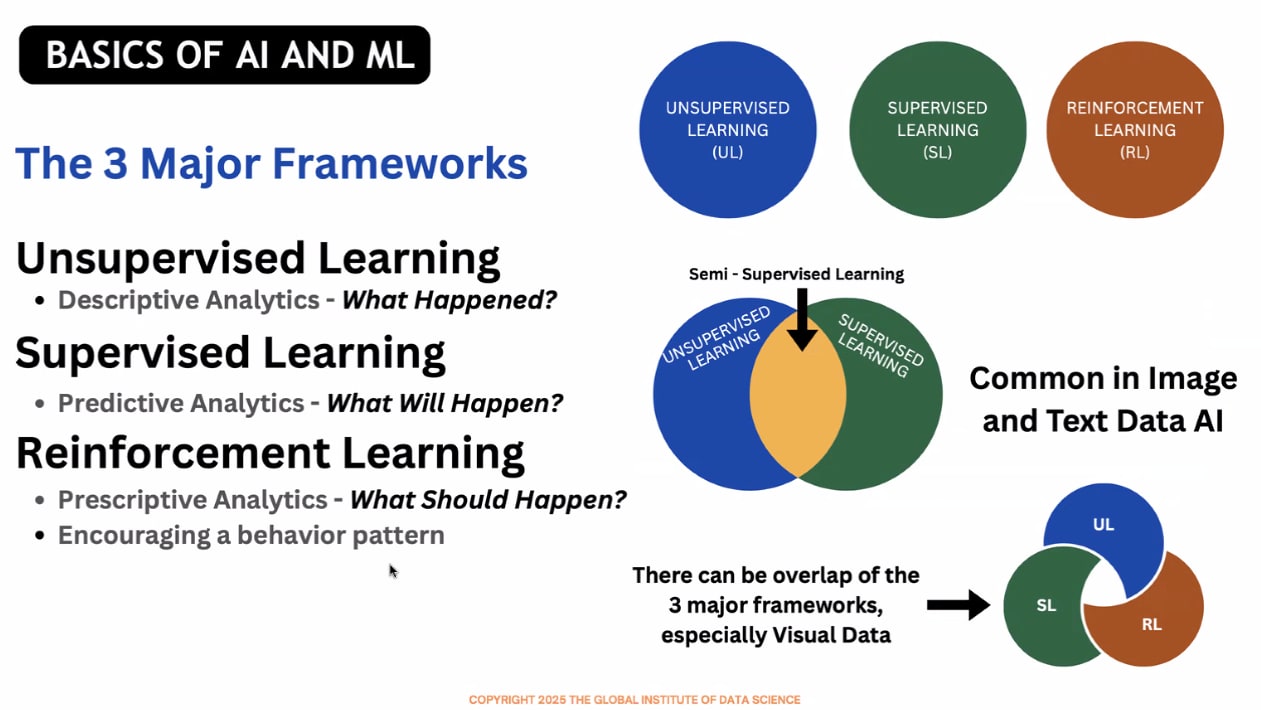
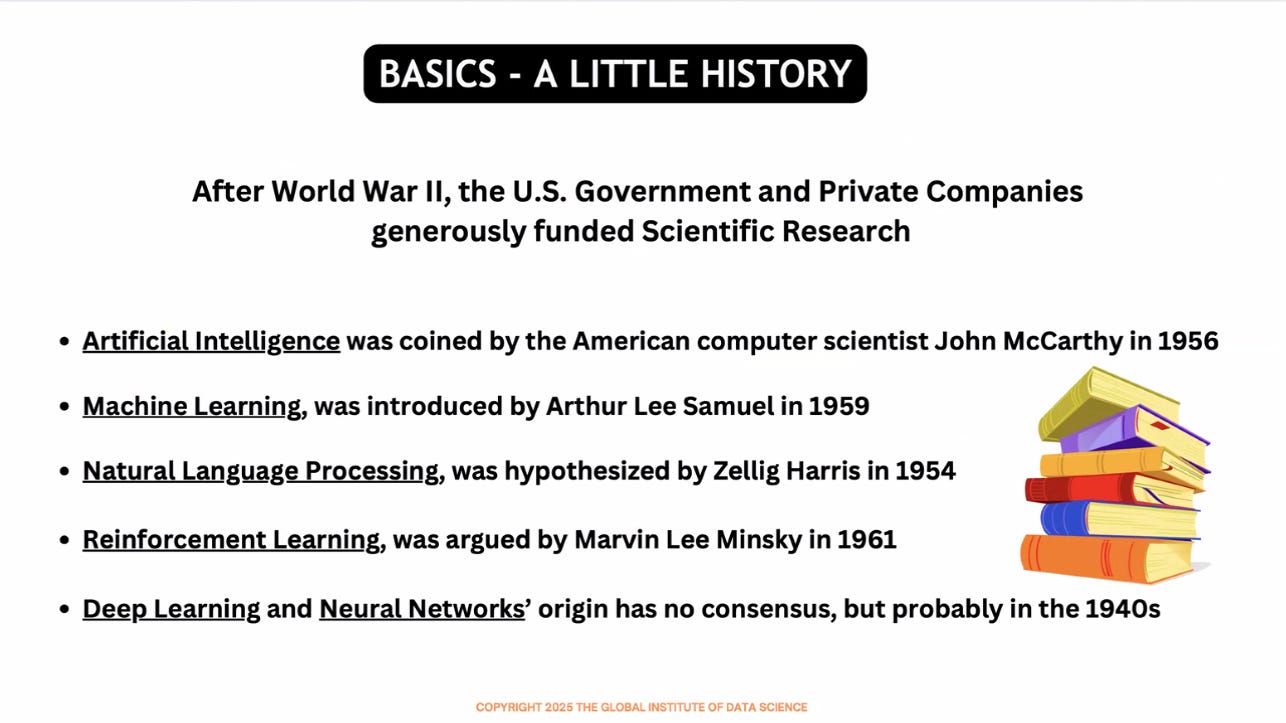
A significant portion of the workshop focused on the definition and applications of artificial intelligence, including machine learning and deep learning. The speaker discussed the three main types of learning—unsupervised, supervised, and reinforcement learning—providing real-world examples. Historical context was provided, tracing the evolution of AI concepts and addressing misconceptions about AI consciousness. The speaker expressed skepticism regarding the development of truly autonomous robots, predicting that advancements in this area may not materialize until 2040 or 2050.
The discussion also tackled prevalent myths in data science, particularly the misconception that extensive coding skills are necessary. The speaker emphasized the availability of no-code solutions and clarified that a PhD is not a prerequisite for data science roles. The importance of hiring professionals with a data science background over traditional technology roles was highlighted, along with examples of companies excelling in data governance. Challenges faced by big tech companies, including the innovator's dilemma, were discussed, alongside recommendations for promising AI startups.
The workshop concluded with a focus on the intricacies of data engineering and the importance of a problem-first approach to AI strategy. The speaker illustrated successful data strategies from companies like Sephora and Home Depot, while also noting the high failure rate of AI projects. Discussions on the intersection of AI with emerging technologies, such as quantum computing, and the regulatory landscape surrounding AI highlighted ongoing challenges in the field. The session underscored the need for better education and knowledge transfer to navigate the complexities of AI effectively.
Chapters & Topics:
Introduction to AI Fundamentals and Speaker Background
The workshop features an introduction by John Thomas Foxworthy, who emphasizes the instructor's two decades of experience in artificial intelligence and data science. The instructor, who has been active in the field since 2005, will discuss foundational concepts in AI, machine learning, and data science, along with addressing common myths and realities surrounding AI.
Myths and realities surrounding AI and its capabilities.
Understanding Artificial Intelligence and Its Frameworks
Speaker 2 outlines the basic definitions and frameworks of artificial intelligence, emphasizing the importance of understanding terms like machine learning and deep learning. The speaker highlights three primary questions addressed by machine learning: what happened, what will happen, and what should happen, along with examples of unsupervised and supervised learning. Additionally, the role of natural language processing and generative AI is introduced as extensions of these frameworks.
Understanding AI Consciousness and Its Implications
Speaker 2 explains the concept of consciousness and its relevance to artificial intelligence, noting that true self-awareness is not present in current AI systems. They point out that companies often manipulate perceptions of AI capabilities to boost stock prices and avoid accountability for errors. The speaker also describes the process of training robots, which involves human movement replication rather than spontaneous behavior.
Myths and Realities of Data Science and AI
Speaker 2 clarified that no-code platforms have been available since 2005, allowing users to engage with machine learning without extensive coding knowledge. They explained the differences between data science and computer science, asserting that a bachelor's degree in data science is sufficient and less math-intensive than a math degree. Additionally, they advised companies to hire chief data officers or data scientists rather than chief technology officers for data-related roles.
The importance of data governance and strategy in AI implementation.
Insights on AI Trends and Big Tech Challenges
Speaker 2 addressed misconceptions about big tech's role in AI, noting that many AI experts do not see their future in large organizations due to bureaucratic challenges. They pointed out that the innovator's dilemma prevents big tech from fully embracing AI innovations, as new products could cannibalize existing ones. Additionally, they mentioned notable AI startups and the cultural tensions between small and large tech companies.
Understanding GPT and Its Framework
Speaker 2 explained that GPT stands for generalized pre-trained transformers, which involves transforming text-based data for machine learning algorithms. They described the process of inputting text into a system like ChatGPT, where it is converted into numerical data and then transformed back into text for responses.
Discussion on AI, Energy Sources, and Legal Frameworks
Sasha Golokov questioned whether the search for cheap renewable energy sources could hinder technological progress, to which Speaker 2 responded that supply chain issues and rising material costs are already impacting the industry. They noted that while there are some promising developments in lithium sourcing, the processing of these materials for AI applications remains a significant challenge. Additionally, Speaker 2 discussed the chaotic state of AI regulation, describing it as a "Wild West" scenario with little international cooperation.
The impact of energy sources on AI development and sustainability.
Discussion on AI and Quantum Computing
Christian inquired about how AI gathers data from the internet and speculated on the potential of quantum computers to significantly enhance processing capabilities in robots. Speaker 5 responded by highlighting the need to clarify the relationship between quantum computing and AI, suggesting that this topic could be explored in an upcoming event called "Quantum Myth." Speaker 2 also noted that this myth could be included in their presentation materials.
Data Engineering and AI Strategy Insights
Speaker 2 elaborated on the role of data engineering in AI, noting that effective data strategies are crucial for business success. They provided examples of how companies like Sephora and Home Depot leverage synthetic data to replicate market conditions and drive revenue. Additionally, they pointed out that many AI projects fail due to poor ideation and a lack of alignment between data and business strategies.
Advances in Automotive Technology and AI Integration
Rafael de la Cruz Jr. inquired about the transferability of automotive technologies, particularly from Toyota, to AI applications. Speaker 2 highlighted that Waymo is currently leading in this area but noted that regulatory hurdles and the complexity of real-world driving environments pose significant challenges. He explained that while drones can operate autonomously due to less complex environments, cars face numerous unpredictable factors that complicate the implementation of deep reinforcement learning.
Understanding Agentic AI and the Role of Education in AI Development
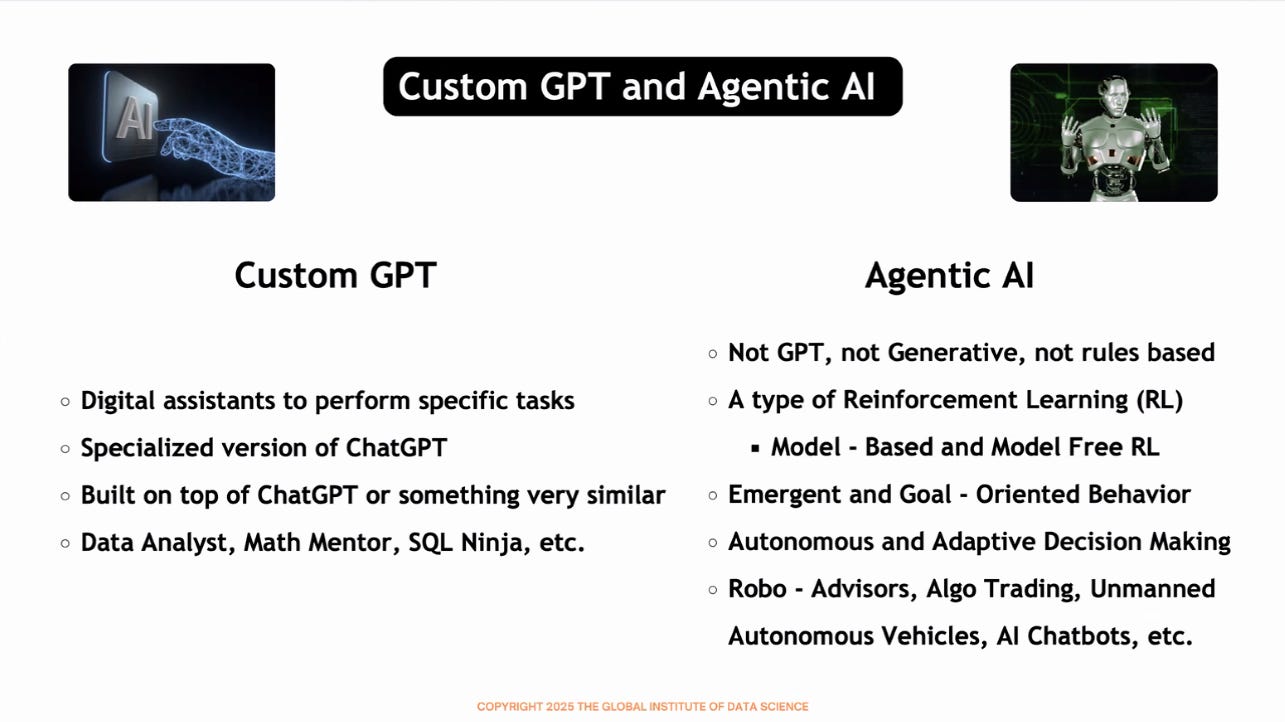
Speaker 1 asked for clarification on agentic AI, leading Speaker 2 to explain that it involves functionalities similar to those of an agent, contrasting it with custom GPTs. Speaker 2 expressed concern over the term "agentic AI," suggesting it confuses people and is driven by marketing rather than substance. He emphasized the importance of understanding the underlying mechanics of algorithms rather than getting caught up in terminology.


